
Digital wall art has become a popular way to make homes, offices, apartments, and creative spaces feel more personal. Instead of spending hours visiting art galleries or searching through physical stores, people can explore digital artwork online, choose a design they like, and often print it in a format that suits their space.
From modern abstract designs and peaceful landscapes to minimalist illustrations and photography, digital artwork offers many ways to refresh an interior. It can also be a practical option for people who want flexible sizes, convenient access, and more control over how their wall decor looks.
However, finding the right artwork requires more than choosing an attractive image. Buyers should understand image resolution, licensing, file formats, printing options, and the difference between a digital art marketplace and a general online publishing website.
That distinction matters when researching wallpostmedia.com a guide to premium digital media wall art. The keyword may suggest a dedicated wall-art platform, but the publicly available website information describes WallPostMedia as a general-interest digital publishing website. Its content focuses on informational articles and topics such as technology, business, lifestyle, and entertainment. It does not establish that the site operates an online art store or offers downloadable wall-art products.
This guide explains the digital wall art market, how premium artwork is evaluated, what buyers should check before downloading or printing an image, and how to understand WallPostMedia’s actual online presence.
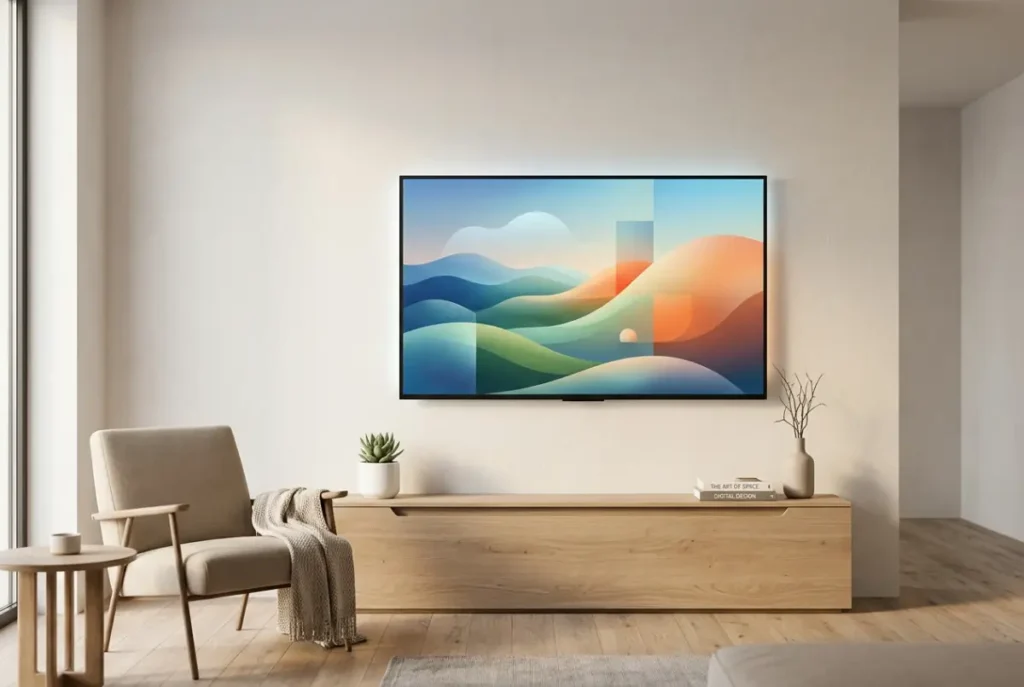
1. What Is Digital Media Wall Art?
Digital media wall art refers to artwork created, edited, stored, or distributed in digital form. Instead of purchasing an already framed painting, customers may obtain a digital image file and use it to create a physical print.
Digital artwork can include:
- Abstract paintings and geometric compositions
- Landscape and nature photography
- Minimalist illustrations
- Typography and inspirational quotes
- Botanical artwork and floral designs
- Modern graphic compositions
- Vintage-inspired posters
- Digital paintings and artistic portraits
- Architectural and city photography
The biggest advantage is flexibility. A digital file can sometimes be printed in several sizes, depending on its resolution and the seller’s licensing terms. A buyer might use one design in a small office frame or choose a larger print for a living room.
Digital wall art is also useful for people who enjoy changing their home decor. Instead of purchasing a new physical canvas every time their style changes, they can explore new designs and print selected pieces when needed.
However, not every digital image qualifies as premium artwork. Image quality, originality, composition, licensing, and production standards all influence the final result.
2. Understanding WallPostMedia.com
Before discussing premium wall decor, it is important to understand the website associated with the keyword.
WallPostMedia.com presents itself as an online publishing platform. Its website contains informational articles covering different subjects rather than a clearly identifiable collection of digital artwork.
The website’s published description highlights topics such as technology, business, lifestyle, entertainment, helpful guides, and online trends. Its stated goal is to make information accessible through organized, reader-friendly content.
This means visitors should not automatically assume that WallPostMedia is a digital art store simply because its name contains the word “Media.”
A publishing website and an online art marketplace serve different purposes:
| Website type | Main purpose |
|---|---|
| Digital publishing website | Shares articles, guides, and informational content |
| Digital art marketplace | Offers artwork created by artists or designers |
| Print-on-demand store | Produces physical products after an order |
| Design platform | Provides tools to create or customize artwork |
| Stock image library | Licenses digital images for permitted uses |
Understanding these differences helps users avoid confusion when researching websites online.
For anyone searching wallpostmedia.com a guide to premium digital media wall art, the most useful starting point is to separate the search topic from the services the website actually confirms. A guide can explain digital wall art as a broader subject without claiming that WallPostMedia sells products that have not been verified.
3. What Makes Digital Wall Art Premium?
Premium digital wall art is not simply an image with an expensive-looking design. Quality comes from several elements working together.
High image resolution
Resolution is one of the most important factors when preparing artwork for printing. A low-resolution image may look sharp on a phone but become blurry or pixelated when enlarged.
For print projects, buyers should check the image dimensions and the intended print size. A common professional printing guideline is 300 pixels per inch for close-viewed prints, although the appropriate resolution can vary with viewing distance and print technology.
For example, a print measuring 12 by 16 inches at 300 pixels per inch would require an image around 3,600 by 4,800 pixels.
Large wall displays may work with lower pixel density when viewed from farther away, but buyers should follow the printer’s recommendations.
Original design and creativity
Originality gives artwork character. A thoughtful composition, balanced colors, and a recognizable artistic style can make a piece feel more distinctive than a generic decorative image.
Buyers should look for clear information about the artist, creator, or source of the artwork. If a marketplace does not explain where its designs come from, it may be difficult to assess originality or usage rights.
Color accuracy
Color can appear different across phones, computer monitors, and printed materials. A bright blue displayed on a screen may look darker when printed on matte paper.
Premium artwork should be prepared with suitable color management and printing guidance. Buyers should also consider whether their printer supports the file’s color profile.
Composition and visual balance
Good wall art should work within its surroundings. The main subject should be easy to understand, and the design should have enough visual balance to complement the room.
A beautiful image may still look out of place if its colors, proportions, or subject matter clash with the furniture and overall interior style.
File quality
A high-quality digital product should have clear download information and a suitable file format. Buyers should know whether they are receiving a JPEG, PNG, PDF, TIFF, or another format.
The seller should also explain whether the file is intended for printing, digital display, or both.
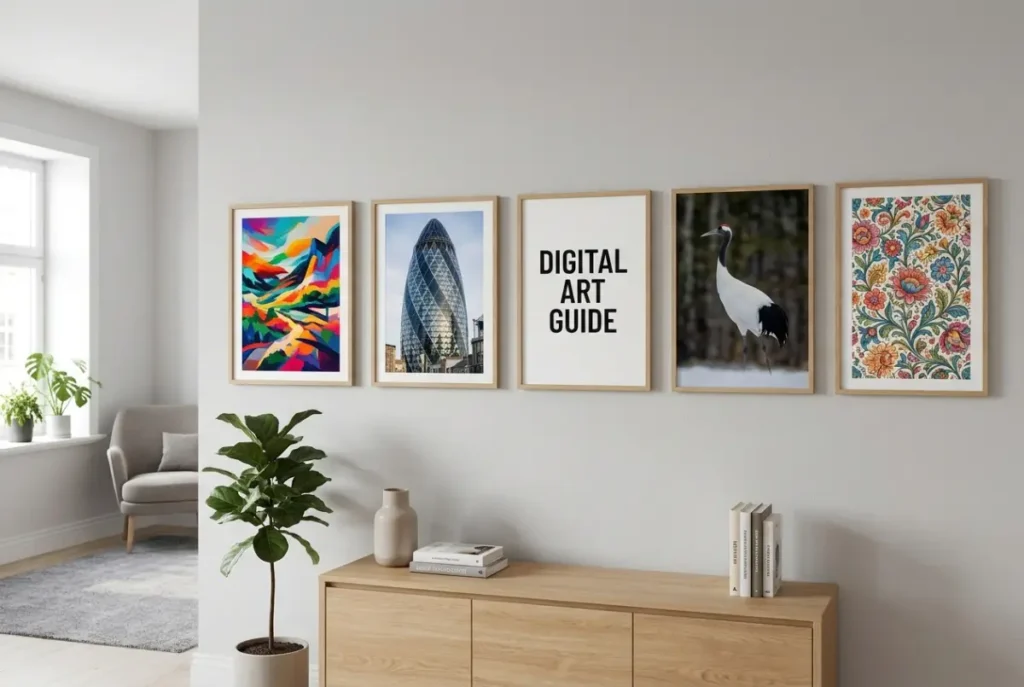
4. Popular Types of Digital Wall Art
Digital wall art covers a wide range of creative styles. Choosing the right category depends on personal taste, room design, and the atmosphere someone wants to create.
Abstract digital art
Abstract artwork uses shapes, lines, colors, and textures to create visual interest without necessarily representing a recognizable object.
It works well in modern living rooms, creative offices, and spaces with simple furniture. Neutral abstract designs can create a calm appearance, while bold compositions can become the main focal point of a room.
Minimalist wall art
Minimalist designs use limited colors, simple shapes, and clean compositions. They are popular in Scandinavian-inspired interiors, modern apartments, and home offices.
A small collection of minimalist prints can create a coordinated gallery wall without making the room feel crowded.
Nature and landscape artwork
Nature-inspired artwork includes mountains, forests, beaches, flowers, and wildlife. These designs can introduce a peaceful atmosphere and connect indoor spaces with the natural world.
Landscape photography is particularly effective above sofas, beds, and dining room furniture.
Botanical and floral designs
Botanical artwork features plants, leaves, flowers, and natural patterns. It can add color without overwhelming a room.
These designs are suitable for bedrooms, kitchens, reading areas, and home offices. Neutral botanical illustrations are especially easy to combine with wood furniture and natural fabrics.
Typography and quote prints
Typography artwork uses words, letters, and carefully selected fonts as the main visual elements.
It may feature motivational messages, short phrases, or decorative lettering. Buyers should pay attention to spelling, font quality, spacing, and readability before printing.
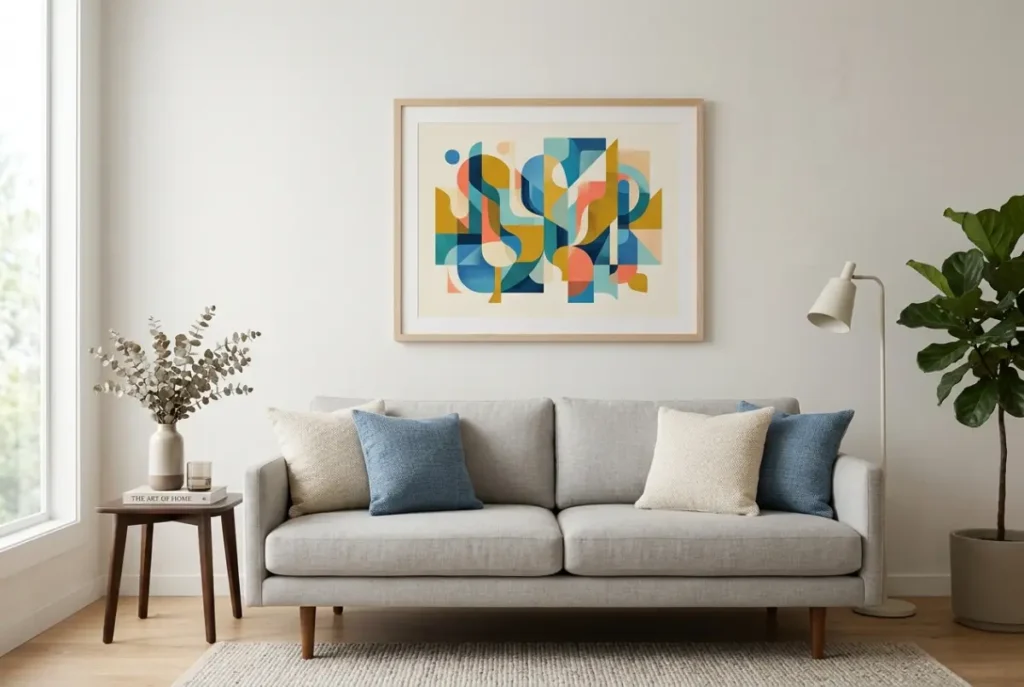
5. How to Choose Digital Wall Art for Different Rooms
Artwork should complement the room’s purpose and existing design. A piece that looks excellent in a home office may not create the right atmosphere in a bedroom.
Living room
The living room is often the best place for a larger statement piece. A wide landscape, abstract composition, or coordinated gallery wall can create a visual center.
Consider the width of the sofa and the available wall space. Artwork placed above furniture should usually be proportionate to the furniture below it.
Bedroom
Bedrooms often benefit from calming colors and subjects. Soft landscapes, botanical prints, and subtle abstract artwork can create a relaxing atmosphere.
A large horizontal print above the bed is a common option, but two or three coordinated smaller pieces can also work.
Home office
A home office provides an opportunity to use artwork that feels inspiring without becoming distracting.
Minimalist illustrations, architectural photography, and simple typography can work well. Avoid placing highly reflective glass directly opposite a bright window if glare is likely to become a problem.
Kitchen and dining area
Food photography, botanical prints, coffee-themed artwork, and colorful illustrations can add personality to these spaces.
For kitchens, consider the environment. Prints should be protected from moisture, heat, and cooking residue. Framing behind suitable glass or acrylic can help protect the artwork.
Hallways and entryways
Hallways often have limited wall space, making smaller prints or vertical compositions practical choices.
A group of matching frames can create a gallery-style appearance. Keep spacing consistent to make the arrangement feel intentional.
6. Digital File Formats: What Buyers Should Know
A digital artwork purchase may include one or more file formats. Each format has different strengths.
| File format | Common use | Main consideration |
|---|---|---|
| JPEG | Photography and general prints | Uses compression |
| PNG | Graphics and transparent artwork | Can produce larger files |
| Print-ready documents and layouts | Check embedded image quality | |
| TIFF | Professional image production | Often creates large files |
| SVG | Vector illustrations and graphics | Not suitable for every artwork type |
JPEG files are widely supported and often suitable for photographic prints. PNG files can be useful for illustrations and artwork with transparent backgrounds.
PDF files may be convenient when a seller provides a prepared print layout. TIFF is often used in professional imaging workflows. SVG is a vector format that can scale cleanly when the artwork is built from vector elements.
The best format depends on the design and printing process. Buyers should not assume that every file can be enlarged without losing quality.
7. How to Print Digital Wall Art
After obtaining a properly licensed digital artwork file, the next step is choosing how to print it.
Print at home
Home printing can be convenient for small posters and simple designs. However, results depend on printer quality, ink, paper, and color settings.
Before printing a large design, consider making a small test print to check the colors and sharpness.
Use a local print shop
A professional print shop can help with paper selection, sizing, and finishing. This option may be useful for large artwork or files that require careful color handling.
Ask the shop which file formats it accepts and whether it recommends a particular resolution.
Order an online print
Online printing services allow customers to upload artwork and select a physical product. Options may include posters, framed prints, canvas prints, and other wall decor.
Compare production costs, shipping charges, return policies, and delivery estimates before ordering.
Choose suitable paper and materials
The printing material affects the final appearance.
- Matte paper: Reduces glare and offers a softer appearance.
- Glossy paper: Produces stronger reflections and can make colors appear more vivid.
- Canvas: Creates a textured, gallery-style finish.
- Fine-art paper: Often provides a premium surface for detailed artwork.
- Metal prints: Can produce a modern finish, depending on the image and production method.
The right material depends on the artwork, room lighting, and personal preference.
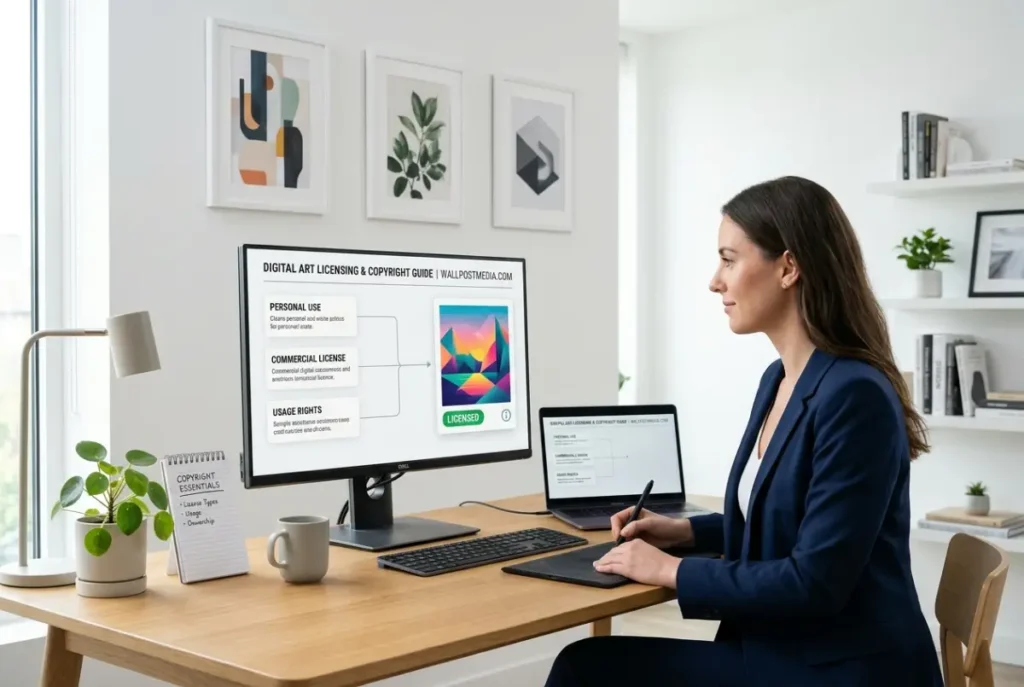
8. Understanding Copyright and Digital Art Licensing
Copyright is an important part of purchasing digital artwork. Downloading an image does not automatically mean that the buyer owns the copyright or can use the artwork for any purpose.
A license explains what the customer is allowed to do with the file.
Personal-use licenses
A personal-use license generally allows someone to print artwork for their own home or private space. It may restrict commercial use, redistribution, or resale.
Commercial-use licenses
Commercial licenses may allow artwork to be used in business-related projects. The exact permissions vary, so customers should read the terms before using a design in marketing materials, products, or paid projects.
Extended licenses
Some sellers offer extended permissions for specific uses, such as merchandise or larger-scale commercial projects. These licenses may cost more and may include limits on distribution or production volume.
Why license terms matter
Before buying or downloading an image, check:
- Who created the artwork?
- What type of license is included?
- Can the artwork be printed more than once?
- Is commercial use permitted?
- Can the file be edited?
- Is redistribution prohibited?
- Does the license have an expiration date?
Never assume that an image found through a search engine is free to use. The creator or rights holder may still control how the image is copied, modified, and distributed.
9. Is WallPostMedia.com a Premium Digital Wall Art Marketplace?
This is one of the most important questions for readers researching the topic.
Based on the publicly available website information reviewed for this article, WallPostMedia.com is presented as a digital publishing website. Its content includes general informational articles across multiple subjects.
The available description does not establish that it sells:
- Downloadable wall-art files
- Premium printable posters
- Custom digital paintings
- Framed artwork
- Canvas prints
- Wall-art design templates
- Art licensing packages
That does not mean digital wall art is unrelated to the broader subject of online media. It simply means the website’s confirmed publishing role should not be confused with an unverified retail or design service.
If a visitor encounters a page claiming that WallPostMedia offers premium art downloads, they should verify that claim directly on the exact website before entering payment information or downloading files.
For readers using wallpostmedia.com a guide to premium digital media wall art as a search phrase, the practical takeaway is to check what the website actually offers rather than relying only on a headline or third-party description.
10. How to Evaluate a Digital Art Website Before Buying
There are many websites offering digital images, printable artwork, and design resources. Their quality and business practices can vary.
Use the following checklist before making a purchase.
Check the product catalog
A genuine digital art marketplace should provide clear examples of its products. Look for artwork previews, product descriptions, available sizes, and download details.
Review the pricing
Understand whether the price covers one image, a collection, a subscription, or a physical print.
Check for extra costs, including taxes, shipping, framing, or premium downloads.
Read the licensing terms
A product page should explain whether the artwork is for personal use, commercial use, or another permitted purpose.
Look for contact information
A credible seller should provide a way to contact the business about purchases, technical issues, refunds, or licensing questions.
Review refund and download policies
Digital products can have different refund rules from physical items. Read the policy before paying, especially if downloads become available immediately after checkout.
Check website security
Look for a secure connection and make sure the domain is spelled correctly. A secure connection alone does not prove that a business is trustworthy, but it is an important basic check.
Look for independent customer feedback
Reviews can help identify common problems with print quality, delivery, file access, and customer service. Give more weight to detailed reviews that describe an actual purchase.
11. Benefits of Digital Wall Art for US Homes
Digital wall art fits well with the way many American households approach home decoration. People move between apartments, update rooms, create home offices, and change decor as their preferences develop.
Some of the main benefits include:
Flexible sizing: A suitable high-resolution design may be available in several print dimensions, depending on its original quality and license.
Convenience: Digital files can often be accessed online without waiting for a physical artwork shipment.
Personalization: Buyers can select designs that match their colors, furniture, and preferred interior style.
Room-by-room planning: Digital prints make it easier to coordinate artwork across multiple spaces.
Creative options: Digital formats provide access to photography, illustrations, typography, and contemporary graphic design.
There are also limitations. Printing costs, framing, paper quality, and licensing can add to the total expense. A digital file may look different when printed, and a low-quality download can disappoint when enlarged.
For that reason, convenience should always be balanced with careful product research.
12. Digital Wall Art Trends to Watch
Digital wall decor continues to reflect wider interior design preferences. While trends change, several styles remain popular in modern homes.
Nature-inspired interiors
Landscape photography, botanical illustrations, and earthy color palettes help create a natural, relaxed appearance.
Neutral color schemes
Beige, cream, gray, soft brown, and muted green work well with many interior styles. Neutral artwork can also be easier to coordinate when furniture changes.
Large statement prints
Oversized artwork can create a focal point in a living room or open-plan space. Buyers should measure the wall before selecting a large print.
Gallery walls
Gallery walls combine multiple pieces into one arrangement. A consistent frame style or color palette can help different designs feel connected.
Personalized artwork
Custom illustrations, family photography, location-based prints, and personalized typography allow people to create decor with personal meaning.
Digital and AI-assisted artwork
Digital tools, including AI-assisted design systems, have expanded the ways artists can create visual concepts. Buyers should still examine originality, image quality, usage rights, and the seller’s description of how a work was produced.
13. Common Mistakes to Avoid When Buying Digital Wall Art
Even attractive artwork can become a poor purchase if important details are overlooked.
Ignoring resolution: A small image may not work as a large wall print.
Skipping the license: Buyers may unintentionally use an image outside the permissions granted by its creator.
Choosing the wrong dimensions: A print that is too small may look disconnected from the furniture or wall.
Ignoring color differences: Screen colors are not always identical to printed colors.
Overlooking hidden costs: Printing, framing, and shipping can make a seemingly inexpensive file more costly.
Trusting unclear product claims: A website name or promotional description does not prove that a particular product or service exists.
Confusing similar domains: Websites with similar names may be separate businesses. Check the full domain before purchasing or sharing personal information.
Taking a few minutes to review these details can prevent disappointment and help buyers select artwork that looks good in their space.
14. Frequently Asked Questions
What is digital media wall art?
Digital media wall art is artwork distributed in digital formats. Customers may download or license an image and use it for permitted digital display or physical printing.
Is WallPostMedia.com a digital wall art store?
The publicly available information reviewed for this article describes WallPostMedia.com as a general-interest publishing website. It does not establish that the domain operates a digital wall-art store or sells printable artwork.
What makes digital wall art premium?
Premium digital wall art generally combines strong resolution, thoughtful composition, good color quality, originality, suitable file formats, and clear usage rights.
What is the best file format for printable wall art?
JPEG, PNG, PDF, TIFF, and SVG can all be useful, depending on the artwork. The best choice depends on whether the design is photographic, illustrative, vector-based, or prepared as a print layout.
Can I print digital artwork at home?
Yes, if the file’s license permits printing and the image has sufficient quality for the intended size. Printer capabilities, ink, and paper also affect the final result.
Can digital wall art be used commercially?
Only when the applicable license allows commercial use. Personal-use downloads should not be assumed to include permission for business projects or resale.
Is digital wall art cheaper than traditional artwork?
It can be less expensive to obtain a digital file than to purchase an original physical piece. However, printing, framing, licensing, and materials can increase the final cost.
How can I choose the right wall art for my living room?
Consider wall dimensions, furniture width, room colors, lighting, and the overall style of the space. Large landscapes and abstract prints are common choices for living rooms.
How do I avoid low-quality digital art downloads?
Check the image dimensions, preview quality, seller information, file format, customer feedback, and licensing terms before purchasing.
Conclusion
Digital wall art gives homeowners and design enthusiasts a flexible way to bring personality, color, and creativity into their spaces. From minimalist illustrations to large landscape prints, the right artwork can help transform a plain wall into an attractive focal point.
However, choosing premium digital artwork requires attention to more than appearance. Image resolution, file formats, printing materials, copyright permissions, seller transparency, and total cost all deserve consideration.
When researching wallpostmedia.com a guide to premium digital media wall art, it is especially important to distinguish the subject of digital wall decor from the verified purpose of the website. WallPostMedia.com is presented as a general-interest publishing platform, and the available information does not confirm that it operates an art marketplace or sells printable wall art.
Readers should therefore verify product claims directly, check the exact website address, and review all purchase and licensing terms before making a decision. With careful research, it becomes much easier to find digital artwork that suits your home, your budget, and your personal style.

Hobby & Animal Names
Leo Hartman has owned dogs, birds, and one very difficult goat. He writes the hobby and animal names content here. Before any name makes the list, he tries it out loud first, usually on his dog, to see if it actually sounds right.