

The internet is full of websites covering news, lifestyle, technology, entertainment, business, and everyday topics. Some quickly build a recognizable identity, while others attract attention because visitors want to understand who is behind them, what they publish, and whether their information is reliable. Wallpostmedia.com is one such name that may prompt questions from curious readers.
When people search for unmasking wallpostmedia.com, they may be looking for a simple explanation of the website, its purpose, the type of content it offers, or whether it is worth visiting. They may also want to know how to evaluate its credibility, understand its online presence, and identify the signs of a trustworthy digital publication.
This guide takes a practical, reader-first approach. Rather than making unsupported claims about the site’s ownership, editorial team, traffic, or business model, it explains how to investigate a website responsibly and what information readers should look for. This distinction matters: a website’s name or appearance alone cannot establish who operates it or whether every article is accurate.
By the end, you will have a clear framework for assessing Wallpostmedia.com, understanding its possible role as an online media platform, and deciding how much confidence to place in the information you find there.
1. What Is Wallpostmedia.com?
Wallpostmedia.com is an online publishing website that presents articles across several general-interest categories. Its homepage includes topics such as business, health, technology, travel, lifestyle, and other informational subjects. This makes it closer to a multi-topic blog or digital publication than to a single-purpose software product or online store. Wallpostmedia+1
The website’s broad approach means visitors may arrive with very different interests. One reader might be researching a business topic, another may be looking for a technology explanation, and someone else may simply want a practical guide or an article about everyday life.
A multi-topic publication can be useful because it brings different subjects together in one place. However, broad coverage also creates a responsibility to handle each subject carefully. An article about entertainment does not require the same level of evidence as one about personal finance, health, or legal matters.
A general-interest publishing model
A general-interest blog typically publishes articles for readers who want accessible explanations rather than highly specialized academic material. Its content may include:
- Informational articles that explain unfamiliar subjects.
- Practical guides that walk readers through common tasks.
- Business and technology discussions.
- Lifestyle and travel topics.
- Health-related explainers and general awareness articles.
- Entertainment, culture, and trending subjects.
The exact range of topics can change as a website publishes new material. Visitors should therefore use the live homepage and category pages to understand what is currently available, rather than relying on an old description.
What it is not necessarily
A name containing the word media does not automatically mean a website is a traditional newsroom, a media agency, or a social network. Likewise, a website that publishes business articles is not automatically a financial research firm.
The best way to describe Wallpostmedia.com is to look at what the site actually offers: its published articles, navigation, contact information, and any services it clearly explains. Based on the visible homepage, it functions as a content-publishing website. Wallpostmedia
2. Why Are People Searching for Wallpostmedia.com?
People often search for a website name when they encounter it in a search result, see one of its articles shared online, receive a link, or hear about it from another person. They may want to know whether the site is useful before spending time reading it.
The search phrase unmasking wallpostmedia.com reflects this kind of curiosity. It suggests that readers want to look beyond the domain name and understand the publication’s identity, content, purpose, and credibility.
There are several common reasons behind that interest.
Understanding the website’s purpose
A visitor may simply want to know what the website does. Is it a news source? A personal blog? A business publication? A collection of how-to articles?
Looking at the homepage, category labels, article titles, and About page can usually provide an initial answer. These pages show how the website presents itself and what kind of reading experience it aims to offer.
Checking whether the site is legitimate
Another reason is trust. Before relying on an unfamiliar website, readers may want to know whether it has real content, working contact information, clear policies, and identifiable editorial standards.
A functioning website is not automatically a reliable one. A professional design can make a site look polished, but appearance alone does not prove that its information is accurate or that its publisher is transparent.
Evaluating its content
Readers may also want to know whether the articles are original, informative, current, and relevant. This is especially important when the website discusses subjects where inaccurate information could affect someone’s decisions.
Exploring publishing or contributor opportunities
Some visitors may be interested in writing for a website, submitting an article, or discussing a business collaboration. Before doing so, they should understand the site’s editorial expectations, contributor terms, fees, and content ownership rules.
A careful review helps separate a genuine opportunity from an offer that is vague or poorly explained.
3. Main Content Categories and Topics
One of the defining features of a multi-topic website is the variety of subjects it can cover. Wallpostmedia.com displays content across several categories, giving visitors different ways to explore its articles. The precise selection may evolve over time, so the homepage and individual category pages are the best places to check for current coverage. Wallpostmedia
Business and finance
Business content can help readers understand companies, workplace developments, entrepreneurship, financial terminology, and changes in the wider economy.
For US readers, useful business articles should explain their subject clearly and distinguish general information from professional advice. A story about investing, for example, should identify the risks involved and avoid suggesting that a particular investment is guaranteed to make money.
Readers should look for supporting evidence, relevant dates, and links to original sources such as government agencies, company filings, or recognized financial institutions.
Technology and digital trends
Technology is a popular subject because digital products and services influence work, education, shopping, communication, and entertainment.
Articles in this category might explain software, online platforms, digital tools, cybersecurity concepts, or emerging technology. Helpful technology content should define technical terms, explain practical uses, and identify important limitations.
When an article discusses a specific app or service, readers should check whether its features and pricing are current. Software changes frequently, and an older guide may no longer match the product’s latest version.
Health and wellness
Health information requires extra care. General wellness articles can introduce common topics, explain terminology, and help readers prepare questions for a qualified professional.
However, a blog article should not replace medical advice, diagnosis, or treatment. Readers should verify important health claims through trusted sources such as the Centers for Disease Control and Prevention, the National Institutes of Health, or a licensed healthcare professional.
This is particularly important when content discusses medication, symptoms, supplements, treatment options, or medical conditions.
Lifestyle and everyday interests
Lifestyle articles cover a wide range of subjects, including personal routines, hobbies, home life, travel, relationships, and everyday decisions.
This category can be approachable because it often focuses on practical questions. A useful article should provide clear steps, realistic suggestions, and enough context for readers to decide whether the advice applies to their situation.
Travel and entertainment
Travel content may introduce destinations, planning ideas, packing suggestions, and ways to compare travel options. Because prices, entry requirements, and transportation details can change, readers should verify time-sensitive information before making reservations.
Entertainment content can include popular culture, online trends, and general-interest stories. Readers should distinguish commentary and opinion from confirmed reporting, especially when an article discusses public figures or developing events.
4. How to Explore the Website
A good website should make it reasonably easy to find information. Visitors should not have to click through unrelated pages just to locate a particular article.
If you are exploring Wallpostmedia.com for the first time, start with its homepage. Review the latest article listings and look at the categories that match your interests. This gives you a quick sense of the site’s current subject areas.
Start with the homepage
The homepage is usually the main entry point for discovering recently published content. Article titles and short descriptions can help you decide which pages are relevant.
Do not assume that the newest article is necessarily the most useful. Instead, choose content based on the question you are trying to answer.
Read the full article
Search-result descriptions and social media previews may leave out important details. Open the article and review its full content before deciding whether it answers your question.
Pay attention to:
- The article’s publication date.
- The author’s name or byline.
- The main subject and intended audience.
- Supporting links and references.
- Any corrections or update notes.
- Whether the conclusion follows from the information presented.
Check related pages
An About page can explain how a website describes its mission and publishing approach. A Contact page may provide a way to ask questions or report an error. Privacy and terms pages can help visitors understand how the site says it handles information and website use.
These pages are useful starting points, but they should not be treated as independent proof of every claim a publisher makes about itself.
5. Is Wallpostmedia.com Trustworthy?
Trustworthiness is one of the most important questions people ask about unfamiliar websites. The honest answer should be based on evidence, not assumptions.
A website can be active and accessible while still having gaps in editorial transparency. It can also publish useful articles without being a major news organization. The key is to evaluate what can actually be confirmed.
For unmasking wallpostmedia.com, it is helpful to separate three things: what the website visibly publishes, what it claims about itself, and what an independent reader can verify.
Look for transparent ownership
A trustworthy publication should make it reasonably clear who operates it. Depending on its structure, this could include a company name, publisher information, editorial leadership, or a meaningful description of the people responsible for its content.
If the website does not clearly identify its owner or editorial leadership, that is a transparency gap worth noting. It does not automatically prove misconduct, but it means readers have less information about who is accountable for published material.
Check author information
Author names can help readers understand who created an article. Strong author profiles may explain a writer’s experience, subject knowledge, or professional background.
A byline alone is not proof of expertise. For topics involving health, finance, law, or technical safety, look for relevant qualifications and references to authoritative sources.
Examine sources and evidence
Reliable articles should support important factual statements. Depending on the subject, useful sources may include:
- Government websites and public records.
- Research papers and academic institutions.
- Official company announcements and filings.
- Recognized professional organizations.
- Direct interviews and clearly attributed statements.
Be cautious when an article makes major claims without explaining where its information came from.
6. How to Evaluate the Quality of Its Articles
A website’s value depends heavily on the quality of its content. A large archive does not automatically mean that readers will find accurate, useful, or original information.
When assessing any article on Wallpostmedia.com, consider the following elements.
Accuracy
Check important statements against reliable sources. If an article gives a date, price, statistic, law, or product specification, see whether the information matches the original source.
This is particularly important for articles that discuss changing subjects. A page published several years ago may contain details that are no longer correct.
Originality
Useful articles should contribute something beyond repeating information found elsewhere. They might provide a clear explanation, a practical example, a comparison, or a thoughtful summary of reliable evidence.
Readers should be cautious of pages that repeat broad claims without adding context or showing where the information originated.
Readability
Good writing makes information easier to understand. Descriptive headings, short paragraphs, clear explanations, and relevant examples help readers follow a subject.
However, simple language should not come at the expense of accuracy. A complicated topic may require definitions, qualifications, and explanations of uncertainty.
Depth and usefulness
An article should answer the question it promises to address. If the title suggests a detailed guide, readers should expect more than a few general statements.
A useful article typically explains the topic, addresses common questions, discusses relevant limitations, and points readers toward further information when needed.
Timeliness
Some subjects remain relevant for years, while others change rapidly. A basic explanation of a common concept may remain useful, but a guide to software pricing or current regulations may need frequent updates.
Always check whether the article’s date matches the subject’s need for current information.
7. Wallpostmedia.com and the Importance of Digital Publishing
Digital publishing has changed how people discover information. Readers no longer depend only on newspapers, magazines, or television broadcasts. They can find specialist blogs, independent websites, company publications, and educational resources through search engines and social platforms.
A website such as Wallpostmedia.com operates within this wider online publishing environment.
Easier access to information
Online publications make it possible to explore different subjects from almost anywhere. Readers can use a phone, tablet, or computer to find articles when they need them.
This convenience is valuable, but it also means that people must judge the quality of information themselves. Search visibility is not the same as editorial reliability.
A wide range of subjects
Multi-topic publications can introduce readers to subjects they might not otherwise explore. Someone looking for a technology guide may discover a business article or a lifestyle topic while browsing.
The challenge is maintaining suitable standards across different categories. A publisher needs to understand that the evidence required for a health article is different from what is needed for an opinion piece about entertainment.
Competition for readers
Online publishers compete with established news organizations, specialist blogs, video platforms, and social media creators.
To earn repeat visits, a website needs more than frequent publication. It needs clear writing, useful information, a consistent reader experience, and a reason for people to return.
The role of search engines
Search engines help connect articles with people who are looking for answers. Descriptive titles, relevant headings, clear language, and well-organized pages can make content easier to discover.
Still, search optimization should support the reader rather than replace editorial quality. Repeating keywords excessively or creating pages that do not answer the searcher’s question can reduce usefulness.
8. Is the Website Useful for US Readers?
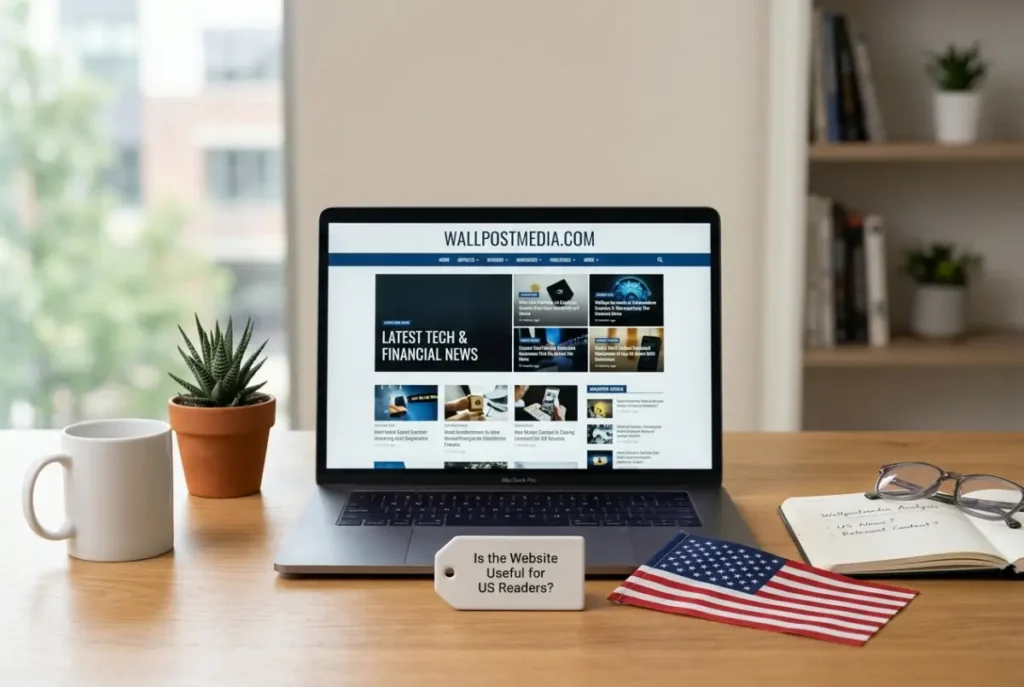
A website with a broad subject range may appeal to readers in the United States, but usefulness depends on whether its articles address the reader’s actual needs.
US visitors should pay particular attention to location-specific details. Laws, tax rules, healthcare systems, consumer protections, prices, and public services can differ substantially between countries and even between US states.
Check whether information applies in the United States
An article about taxes, insurance, employment, or legal requirements should identify the country and jurisdiction it covers. A general explanation may be useful for background, but it should not be mistaken for US-specific guidance.
For example, a discussion of healthcare coverage should distinguish between private insurance, employer-sponsored plans, Medicare, and Medicaid when those subjects are relevant.
Look for US-based sources
When an article makes claims about American policies or services, check whether it references appropriate US sources. Depending on the topic, these might include federal agencies, state government websites, universities, or recognized professional organizations.
Confirm local prices and availability
Product prices, service availability, shipping rules, and subscription plans can vary by location. Readers should check the provider’s official website before making a purchase or commitment.
Consider the intended audience
Not every article needs to be written specifically for Americans. General-interest content can still be useful to a US audience, but location-sensitive advice should be clearly labeled and verified.
9. Privacy and Online Safety: What Visitors Should Check
Whenever you visit an unfamiliar website, basic online safety is worth considering. You do not need to assume a website is dangerous, but you should avoid sharing unnecessary personal information until you understand how the site operates.
Check for HTTPS
Look at the browser’s address bar. HTTPS indicates that the connection between your browser and the website is encrypted.
This is an important security feature, but it does not prove that a publisher is trustworthy. A website can have HTTPS and still publish inaccurate information or use questionable business practices.
Read the privacy policy
A privacy policy should explain what information the website collects, how it uses that information, and whether it shares data with third parties.
Before submitting a contact form or subscribing to anything, look for details about:
- Information collected through forms.
- Cookies and tracking technologies.
- Advertising and analytics services.
- Data sharing with third parties.
- How users can request information or contact the publisher.
If the privacy policy is missing, confusing, or difficult to understand, avoid sharing sensitive information.
Be careful with unexpected downloads
A general-interest article should not normally require you to download an unknown file just to read it. Avoid unfamiliar downloads, browser extensions, or software installations unless you can verify their source and purpose.
Avoid sharing sensitive details
Never provide passwords, payment-card information, government identification numbers, or other sensitive details simply because a website asks for them. Confirm that the request is necessary and that you are dealing with the correct organization.
For additional online safety guidance, US readers can consult the Federal Trade Commission’s consumer advice resources at consumer.ftc.gov.
10. Could Wallpostmedia.com Be Useful for Content Creators?
Online publishing websites can be interesting to writers, bloggers, marketers, and businesses looking to reach new audiences. However, a website’s existence does not automatically mean it offers contributor opportunities or advertising services.
Anyone considering working with Wallpostmedia.com should first confirm what opportunities are actually available.
For freelance writers
Writers should look for clear submission guidelines. These should explain the topics accepted, expected article length, editorial standards, payment arrangements, and the process for submitting work.
Before agreeing to contribute, clarify whether the publisher expects exclusive content, whether the writer keeps copyright, and whether revisions are included in the arrangement.
For digital marketers
Marketers may be interested in whether the website accepts sponsored articles, advertising, or brand collaborations.
Before paying for publication, ask for transparent details about pricing, placement, audience, link policies, and disclosure requirements. A promise of better search rankings or guaranteed traffic should be treated cautiously.
For business owners
A business may consider online publications as one part of a wider content strategy. However, it should evaluate audience relevance rather than choosing a website only because it offers a publication opportunity.
A relevant article that reaches interested readers can be more useful than a placement on a website whose audience has little connection to the business.
Questions to ask before collaborating
Before entering an agreement, ask:
- Who operates the publication?
- What audience does it reach?
- What types of content does it accept?
- Are sponsored articles clearly labeled?
- What are the total fees and payment terms?
- Who owns the published material?
- Can published content be edited or removed?
- Are links handled according to search engine guidelines?
Get important terms in writing. Clear expectations can prevent misunderstandings later.
11. Wallpostmedia.com Compared With Other Online Publications
Readers have many choices when looking for information. They can visit major news organizations, specialist websites, educational platforms, independent blogs, and official government resources.
Each type of source has a different purpose.
| Website type | Main purpose | What readers should consider |
|---|---|---|
| General-interest blog | Covers a variety of topics | Article quality and source transparency |
| Specialist publication | Focuses on a particular subject | Author expertise and depth |
| Major news organization | Reports current events | Reporting standards and corrections |
| Government website | Provides official information | Jurisdiction and publication date |
| Educational website | Explains concepts and skills | Accuracy and learning resources |
| Company website | Shares information about its products or services | Commercial interests and disclosures |
Wallpostmedia.com fits most naturally into the general-interest publishing category based on its visible article listings. That means readers should assess individual articles rather than assume every page has the same level of expertise or authority. <Cite refs={[“turn556345search5”]}/>
For example, a general blog may be a convenient starting point for understanding a technology term. If you need to make a financial decision, however, you should also consult official financial information and qualified professionals.
The most effective research approach is to use a publication for discovery, then confirm important details through sources with direct knowledge or responsibility for the subject.
12. Common Misunderstandings About Wallpostmedia.com
Unfamiliar website names can create confusion, especially when different online pages use similar wording. A few basic distinctions can help visitors avoid incorrect assumptions.
A website name does not establish its ownership
The word Wallpostmedia may appear in different domain names or online references. Similar names do not prove that two websites belong to the same company or share the same management.
Always check the complete domain in the browser address bar before assuming that information about one website applies to another.
A professional appearance does not guarantee accuracy
A modern layout, attractive graphics, and polished writing can improve the reading experience. They do not independently verify the claims made in an article.
Look at the sources, author information, publication date, and evidence behind important statements.
A blog is not automatically a news organization
A website can publish articles about current events without operating as a traditional newsroom. Readers should understand the difference between general commentary, informational blogging, and original news reporting.
Search rankings are not a trust certificate
An article appearing near the top of a search result does not mean that every statement has been fact-checked. Search engines help users discover pages, but readers still need to evaluate the information.
A published article is not professional advice
A general article about medicine, law, or finance may provide background information. It should not be treated as a personalized recommendation from a qualified professional.
13. Practical Checklist Before Relying on an Article
If you find an article on Wallpostmedia.com and want to use its information, take a few minutes to evaluate it.
<escape> </escape>
| Check | What to look for |
|---|---|
| Author | Is the writer identified? |
| Date | Is the information recent enough? |
| Evidence | Are important claims supported? |
| Sources | Do links lead to credible references? |
| Clarity | Does the article explain its subject accurately? |
| Purpose | Is it informational, promotional, or opinion-based? |
| Transparency | Can you identify the publisher or contact the site? |
| Updates | Are corrections or changes explained? |
This process does not require advanced research skills. It simply encourages readers to pause before accepting an online claim as fact.
For topics with significant financial, medical, legal, or safety consequences, use additional authoritative sources. One article should rarely be the only basis for an important decision.
14. Frequently Asked Questions About Wallpostmedia.com
What is Wallpostmedia.com?
Wallpostmedia.com is a general-interest online publishing website. Its homepage features articles across categories such as business, health, technology, travel, and lifestyle. <Cite refs={[“turn556345search5”]}/>
Is Wallpostmedia.com a blog or a news website?
Based on its visible content and article listings, it is best described as a multi-topic publishing website or blog. Its articles should be assessed individually rather than automatically treated as professional news reporting.
What topics can readers find on the website?
Visitors may find content covering business, technology, health, lifestyle, travel, and other general-interest subjects. The available categories can change as new articles are published.
Is Wallpostmedia.com free to visit?
The website’s public homepage and visible articles can be accessed through a standard web browser. Check the individual page for any changes to access requirements or additional offers.
Can I trust information published on Wallpostmedia.com?
Trust should depend on the article’s evidence, author transparency, publication date, and subject matter. For important decisions, verify claims through authoritative sources instead of relying on a single website.
Does Wallpostmedia.com provide professional advice?
A general-interest article should not automatically be considered professional medical, legal, or financial advice. Readers should consult appropriately qualified professionals when they need personalized guidance.
How can I contact the website?
Look for a Contact page or other contact information published on the website itself. Check that the contact details belong to the exact domain you intend to reach before sending personal or business information.
Is Wallpostmedia.com suitable for US readers?
It may be useful for general reading and discovering different subjects. However, US readers should confirm that location-specific information, such as laws, prices, healthcare details, and regulations, applies to the United States.
What does unmasking Wallpostmedia.com mean?
The phrase refers to examining the website beyond its name and appearance. This includes understanding its content, purpose, transparency, online presence, and the evidence supporting its articles.
Should businesses collaborate with Wallpostmedia.com?
Businesses should first confirm whether the website offers contributor, advertising, or sponsored-content opportunities. They should review audience relevance, pricing, disclosure practices, ownership terms, and expected results before agreeing to anything.
15. Final Verdict: What Should Readers Know?
Wallpostmedia.com is a multi-topic digital publishing website that provides readers with articles across several areas of interest. Its broad subject coverage may make it a convenient place to discover general information, explore unfamiliar topics, and browse practical guides.
However, readers should separate the website’s visible publishing activity from assumptions about its ownership, editorial expertise, or overall reliability. A working website and a collection of articles are not enough to establish that every claim is accurate.
The most sensible approach is to review the website’s About, Contact, and privacy pages, examine individual author profiles, and check whether articles provide credible supporting evidence. When a subject involves health, money, legal matters, or personal safety, verify the information through recognized authorities.
For writers and businesses, the same principle applies. Confirm the actual terms of any contributor or advertising opportunity before sharing content, paying fees, or making commitments.
Conclusion
Understanding an unfamiliar digital publication requires more than looking at its domain name. Readers need to examine what it publishes, how it presents information, whether its authors and sources are transparent, and how well its articles support their claims.
That is the practical purpose of unmasking wallpostmedia.com: to look beyond a website’s branding and assess its content and credibility using evidence. Wallpostmedia.com offers a broad publishing experience, but readers should evaluate each article according to its subject and importance.
Use it as a starting point for discovering information, verify important claims with authoritative sources, and avoid sharing sensitive details without a clear reason. A thoughtful approach helps you get value from online content while making better-informed decisions.
Editorial note: This article distinguishes the website’s visible content from claims that could not be independently confirmed. That h

Alex Morgan is a US-based website reviewer who provides honest reviews, practical insights, and helpful recommendations on websites and online services. Alex aims to help readers find reliable platforms and make informed decisions with confidence.