
Few soccer rivalries attract as much attention as El Clásico, the legendary matchup between FC Barcelona and Real Madrid. Fans across the United States tune in to see world-class players, tactical battles, dramatic goals, and the latest chapter in one of the sport’s biggest rivalries.
The starting lineups are among the most important parts of the match preview. They reveal which players the managers trust, how each team plans to attack, and where the biggest tactical advantages might appear. A change at striker, an unexpected midfielder, or a different defensive setup can completely alter the game.
This guide to fc barcelona vs real madrid lineups covers the match context, starting XI information, formations, important players, tactical matchups, and what fans should watch for. It also explains how to check confirmed team sheets and understand the difference between a predicted lineup and the official starting eleven.
Because lineups can change due to injuries, suspensions, fitness concerns, and late managerial decisions, always distinguish confirmed match information from projected selections.
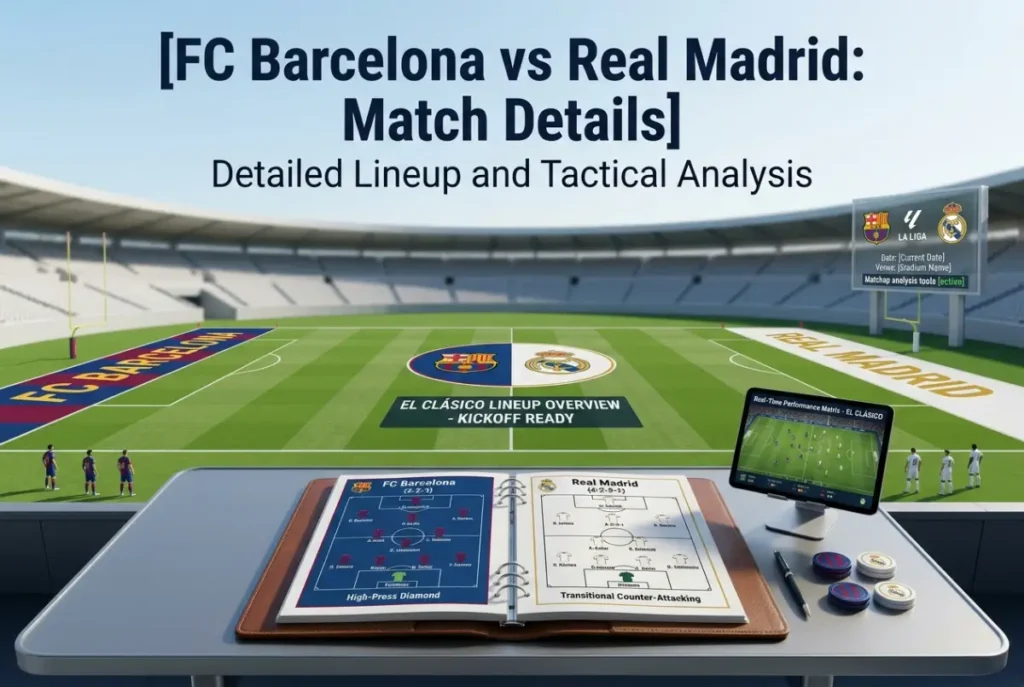
1. FC Barcelona vs Real Madrid: Match Details
The latest meeting took place on Sunday, October 25, 2026, at Spotify Camp Nou in Barcelona. The match was part of Matchday 10 of the Spanish La Liga season.
FC Barcelona
Home team · 1 goal
1–2
Real Madrid
Away team · 2 goals
Date
October 25, 2026
Venue
Spotify Camp Nou, Barcelona, Spain
Competition
La Liga, Matchday 10
Match result and details:
Real Madrid won 2–1, with Kylian Mbappé scoring in the 41st and 87th minutes. Raphinha equalized for Barcelona in the 61st minute after receiving a pass from Pedri. The result ended Barcelona’s nine-game winning start to the league season and reduced its advantage over Madrid at the top of the table to three points.
For fans searching for the starting teams, this guide uses the confirmed lineups from the October 25 match, rather than presenting them as predictions for a future fixture.
2. FC Barcelona Starting XI and Formation
Barcelona manager Hansi Flick selected a 4-3-3 formation, a system designed to combine possession-based soccer with attacking width. The lineup featured a mixture of established stars, creative midfielders, and players asked to fill important roles because of absences.
Barcelona’s confirmed starting eleven
| Position | Player |
|---|---|
| Goalkeeper | Joan García |
| Right back | Xavi Espart |
| Center back | Pau Cubarsí |
| Center back | Gerard Martín |
| Left back | João Cancelo |
| Defensive/central midfielder | Rodri |
| Central midfielder | Pedri |
| Attacking midfielder | Fermín López |
| Right winger | Lamine Yamal |
| Forward | Raphinha |
| Left winger | Anthony Gordon |
Source: confirmed team sheets and match records.
How Barcelona’s formation worked
The 4-3-3 gave Barcelona three central midfielders and three forward positions. This setup was intended to help the team control possession, create passing triangles, and stretch Madrid’s defense across the field.
Joan García started in goal, with Cubarsí and Gerard Martín forming the central defensive partnership. Cancelo and Espart occupied the fullback positions, although Espart was replaced early in the match.
Rodri, Pedri, and Fermín López were responsible for linking the defensive and attacking phases. Pedri offered creative passing, Rodri provided central support, and Fermín looked to move into advanced positions.
The front three offered different attacking options. Yamal provided skill and creativity on the right, Raphinha attacked central spaces, and Gordon offered another route forward.
Barcelona’s lineup had the potential to create dangerous combinations, but its success depended on quick movement, accurate passing, and sufficient defensive protection when Madrid counterattacked.
Barcelona’s most important starters
Joan García: The goalkeeper had a crucial role in protecting Barcelona against Madrid’s direct attacking threats. His positioning and distribution were important to the team’s attempt to build from the back.
Pau Cubarsí: The young center back was central to Barcelona’s defensive organization. His passing ability also helped the team move the ball forward from deeper areas.
Pedri: Barcelona relied on Pedri to connect midfield possession with attacking movement. His ability to find teammates between the lines helped create the equalizing goal.
Lamine Yamal: Yamal was one of Barcelona’s most recognizable attacking threats. His dribbling, close control, and ability to create chances made him a player Madrid needed to monitor closely.
Raphinha: The Brazilian winger supplied Barcelona’s goal, finishing in the 61st minute to bring the score to 1–1. His direct movement and willingness to attack the penalty area made him a key part of the attack.
3. Real Madrid Starting XI and Formation
Real Madrid entered the game with a different tactical approach. Manager José Mourinho selected a starting eleven featuring a balance of defensive strength, midfield experience, and pace in attack.
Real Madrid’s confirmed starting eleven
| Position | Player |
|---|---|
| Goalkeeper | Andriy Lunin |
| Right back | Federico Valverde |
| Center back | Ibrahima Konaté |
| Center back | Dean Huijsen |
| Left back | Marc Cucurella |
| Central midfielder | Aurélien Tchouaméni |
| Central midfielder | Bernardo Silva |
| Attacking midfielder | Jude Bellingham |
| Attacking midfielder/right-sided attacker | Arda Güler |
| Attacking midfielder/left-sided attacker | Yan Diomande |
| Striker | Kylian Mbappé |
Source: confirmed starting XI and match records.
How Madrid’s formation worked
Madrid’s starting positions could be described as a 4-2-3-1. Lunin guarded the goal, four defenders protected the back line, and Tchouaméni and Bernardo Silva supplied central midfield support. Bellingham operated in an advanced role, while Güler and Diomande supported Mbappé.
The arrangement provided options for both structured possession and quick counterattacks. Madrid could defend with a compact shape, win the ball, and move it rapidly toward its forward players.
Valverde’s versatility was particularly valuable. He could support the defense on the right and help Madrid move forward when the opportunity appeared. Cucurella offered defensive work on the opposite side, while Konaté and Huijsen were tasked with managing Barcelona’s movement through central areas.
In attack, Bellingham could connect midfield to the forward line, Güler could create openings with his passing, and Mbappé could exploit spaces behind the defense.
This balance mattered because Barcelona typically looks to dominate possession. Madrid needed to remain organized without losing its ability to threaten whenever Barcelona committed players forward.
Madrid’s most important starters
Andriy Lunin: Lunin started in goal in place of Thibaut Courtois, who was unavailable for the match. His job was especially important against a Barcelona side that looked to create chances through possession and wide attacking play.
Federico Valverde: Valverde’s energy and flexibility allowed Madrid to balance defensive duties with forward movement. He could support the back line while also helping the team transition quickly.
Aurélien Tchouaméni: Tchouaméni was responsible for helping protect the defense and contest central midfield spaces. His positioning was important when Barcelona attempted to combine through the middle.
Jude Bellingham: Bellingham’s advanced positioning gave Madrid another player capable of linking midfield with the attack. His movement also helped Madrid create opportunities during transitions.
Kylian Mbappé: Mbappé was Madrid’s decisive attacking player. He scored both goals, first in the 41st minute and then in the 87th minute, securing the 2–1 win.
4. Barcelona vs Real Madrid Lineups: Side-by-Side Comparison
Comparing both starting elevens helps explain the tactical differences between the teams. Barcelona chose a traditional front three supported by three midfielders, while Madrid used an attacking midfielder behind its main striker.
| Category | FC Barcelona | Real Madrid |
|---|---|---|
| Head coach | Hansi Flick | José Mourinho |
| Starting goalkeeper | Joan García | Andriy Lunin |
| Main formation | 4-3-3 | 4-2-3-1 |
| Central defensive leaders | Pau Cubarsí, Gerard Martín | Ibrahima Konaté, Dean Huijsen |
| Midfield focus | Possession and passing | Balance and transitions |
| Main creative threats | Pedri, Fermín López, Yamal | Bellingham, Güler, Bernardo Silva |
| Main goalscorer in this match | Raphinha | Kylian Mbappé |
| Final score | 1 | 2 |
The most important difference was how the teams used their attacking players. Barcelona wanted to create openings through combinations and movement across the front line. Madrid had a more direct route to goal, with Mbappé positioned to take advantage of space.
Barcelona’s three-man midfield was designed to help maintain control. Madrid’s double-pivot structure offered additional defensive protection while allowing Bellingham and the wide attackers to move into advanced positions.
Neither formation guarantees success on its own. The result depends on execution, individual decisions, pressing intensity, defensive positioning, and how effectively a team reacts when its original game plan is challenged.

5. Key Tactical Battles to Watch
Barcelona’s possession against Madrid’s counterattacks
One of the defining battles was Barcelona’s desire to control the ball against Madrid’s ability to attack quickly after winning possession.
Barcelona’s passing game can force opponents to defend for extended periods. However, committing fullbacks and midfielders forward can leave space behind the defense.
Madrid looked to exploit these openings with direct attacking moves. The approach worked for Mbappé’s opening goal, which came in the 41st minute during a counterattacking sequence.
For US viewers learning more about tactical soccer, this is a useful example of the difference between possession-based play and transition-based attacking.
Pedri versus Madrid’s central midfield
Pedri’s ability to receive the ball under pressure was an important part of Barcelona’s approach. When he had time to turn and look forward, he could help the team progress into dangerous areas.
Madrid needed its central midfielders to limit those opportunities. Tchouaméni’s defensive positioning and Bernardo Silva’s ability to retain and distribute possession helped Madrid compete in the middle of the field.
The contest was not simply about which midfield had more touches. The more meaningful question was which team could turn possession into high-quality chances while limiting the opponent’s best passing options.
Lamine Yamal against Madrid’s defense
Yamal’s individual creativity makes him an important player in any Barcelona preview. He can beat defenders in one-on-one situations, combine with teammates, and create opportunities through crosses or passes into the penalty area.
Madrid’s defenders needed to manage the space around him without allowing Barcelona to exploit the gaps left by additional defensive attention.
A winger can influence a game even without scoring. Drawing defenders away from central areas, winning fouls, and creating space for overlapping fullbacks are all valuable contributions.
Mbappé against Barcelona’s defensive line
Mbappé’s speed and finishing ability presented a major challenge for Barcelona. Defenders had to judge when to step forward, when to protect space behind them, and when to challenge the ball carrier.
If Barcelona pushed too high without effective pressure on the passer, Madrid could send forward passes into dangerous areas. If the defensive line dropped too deep, however, Madrid’s attackers could receive the ball closer to the penalty area.
Mbappé’s two goals showed why managing these moments was so important. His opening goal gave Madrid the lead, and his late finish settled the match.
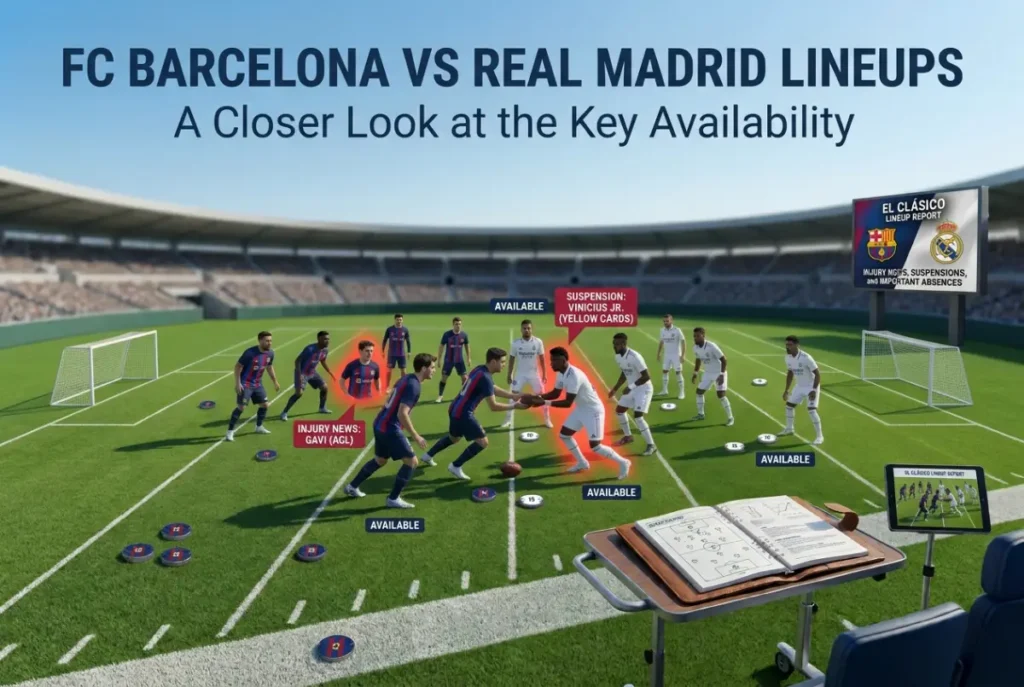
6. Injury News, Suspensions, and Important Absences
Team selection is influenced by more than a manager’s preferred tactics. Injuries, suspensions, illness, and player fitness can change an entire starting eleven.
For the October 25 Clásico, both teams faced notable absences.
Barcelona team news
Barcelona was without several players who might otherwise have been considered for selection. Pre-match reports listed Dani Olmo, Andreas Christensen, and Eric García among the unavailable players, while Jules Koundé was also expected to miss the game because of an ankle concern.
The Standard
+1
These absences reduced Barcelona’s options, particularly in defense and attacking midfield. Flick had to rely on the available squad and adjust the defensive structure accordingly.
Xavi Espart was selected at right back, but he left the match around the 30th minute with ankle discomfort. Alejandro Balde replaced him, changing Barcelona’s defensive arrangement.
FBref
+1
This early substitution is a reminder that the starting lineup does not always reflect the players who will finish the game. Fitness problems can force managers to make changes before their tactical plans have fully developed.
Real Madrid team news
Madrid also had to make adjustments. Vinícius Júnior was suspended, while Thibaut Courtois was unavailable because of illness. Pre-match reports also listed Ferland Mendy, Raúl Asencio, and Rodrygo among the injured players.
Vinícius’s absence was particularly significant because he offers pace, dribbling, and direct attacking runs from wide positions. Madrid instead relied on Güler, Diomande, Bellingham, and Mbappé to provide creativity and attacking threat.
Courtois’s absence meant Lunin took the starting goalkeeper position. This created an important responsibility for the goalkeeper and the defenders in front of him.
When reading lineup reports, fans should remember that injury updates can change rapidly. A player listed as doubtful earlier in the week might be available by kickoff, while a late fitness issue can remove a regular starter from the team sheet.
7. What the Confirmed Lineups Tell Us About the Match
The confirmed fc barcelona vs real madrid lineups offered several clues about the managers’ priorities before kickoff.
First, Barcelona’s 4-3-3 showed a commitment to midfield control and attacking width. The team selected players capable of maintaining possession while creating chances from wide positions and central combinations.
Second, Madrid’s setup provided a more direct attacking route. With Bellingham behind the forward line and Mbappé leading the attack, Madrid could connect defensive recoveries to dangerous forward movements.
Third, the selection of backup goalkeeper Lunin reflected Madrid’s need to adapt to Courtois’s absence. Barcelona also had to adjust its defensive personnel because of injuries and fitness concerns.
Finally, the team sheets highlighted the importance of depth. Substitutes such as Balde, Frenkie de Jong, Eduardo Camavinga, and Denzel Dumfries gave both managers options for responding to the flow of the match. Balde entered early for Barcelona, while Madrid used Dumfries and Camavinga later in the game.
The result reinforced one of soccer’s most important lessons: a strong starting lineup creates opportunities, but tactical discipline and effective finishing often determine the final score.
8. Who Were the Key Players in El Clásico?
The most effective way to evaluate a lineup is to look beyond the names on the team sheet. Individual performances, decision-making, and contributions to the team’s overall plan all matter.
Kylian Mbappé: Madrid’s match winner
Mbappé was the standout goalscorer in the October 25 meeting. His first goal put Madrid ahead before halftime, and his second goal in the 87th minute secured the victory.
His performance illustrated the value of having a forward who can capitalize on limited opportunities. Madrid did not need to dominate every attacking phase to win; it needed to create and finish decisive chances.
Raphinha: Barcelona’s attacking spark
Raphinha scored Barcelona’s only goal, equalizing in the 61st minute. His movement and finishing helped bring the home side back into the contest.
His goal also demonstrated how Barcelona’s passing combinations could break through Madrid’s defensive organization. Pedri’s contribution to the move highlighted the connection between midfield creativity and forward movement.
Pedri: The midfield creator
Pedri remained important to Barcelona’s approach because he could connect different areas of the pitch. His passing helped Barcelona progress through midfield and create openings for its attackers.
Players in this role can influence a match without scoring. Their value comes from controlling tempo, identifying passing lanes, and helping teammates receive the ball in more dangerous positions.
Jude Bellingham: The attacking link
Bellingham gave Madrid an advanced midfield option who could support Mbappé and help connect the team’s transitions. His positioning helped Madrid maintain an attacking threat even when Barcelona enjoyed periods of possession.
These players illustrate why the best lineup analysis considers individual ability alongside the tactical system in which each player operates.
9. How to Check Official Starting Lineups Before Future Matches
If you are following a future Clásico, do not assume that the previous match’s starting eleven will remain unchanged. Managers regularly rotate players because of fitness, schedule congestion, and tactical considerations.
Use these steps to find reliable lineup information.
- Check official club announcements. Visit the FC Barcelona website and the Real Madrid website for team news and matchday updates.
- Look for the confirmed team sheet. Official starting elevens are generally published shortly before kickoff. Treat earlier projected selections as predictions, not confirmed facts.
- Review injury and suspension reports. A regular starter may be unavailable because of an injury, a suspension, or illness.
- Check the formation and player positions. The same eleven can play differently depending on whether a manager uses a 4-3-3, 4-2-3-1, or another tactical setup.
- Review substitutions after kickoff. Early changes can significantly alter the original tactical plan.
For fans in the United States, checking official team announcements before watching a match is particularly helpful when kickoff falls during a busy workday or late at night.
10. Frequently Asked Questions
What were the fc barcelona vs real madrid lineups for October 25, 2026?
Barcelona started with Joan García, Xavi Espart, Pau Cubarsí, Gerard Martín, João Cancelo, Rodri, Pedri, Fermín López, Lamine Yamal, Raphinha, and Anthony Gordon.
Madrid started with Andriy Lunin, Federico Valverde, Ibrahima Konaté, Dean Huijsen, Marc Cucurella, Aurélien Tchouaméni, Bernardo Silva, Jude Bellingham, Arda Güler, Yan Diomande, and Kylian Mbappé.
What formation did Barcelona use?
Barcelona used a 4-3-3 formation, with three midfielders supporting a front three. The setup was designed to help the team control possession and create chances through wide attacking play.
What formation did Real Madrid use?
Madrid’s starting positions were arranged in a 4-2-3-1. Tchouaméni and Bernardo Silva provided central support, Bellingham operated in an advanced role, and Mbappé led the attack.
Who scored in the latest Clásico?
Kylian Mbappé scored twice for Real Madrid, in the 41st and 87th minutes. Raphinha scored Barcelona’s goal in the 61st minute. Madrid won 2–1.
Why was Vinícius Júnior missing?
Vinícius Júnior was suspended for the October 25 match. His absence meant Madrid had to use alternative attacking options rather than its usual combination of wide forwards.
Was Lamine Yamal in Barcelona’s starting lineup?
Yes. Yamal started on Barcelona’s right side, providing width, dribbling ability, and creative attacking options.
Where can US fans find future lineups?
Fans can check the clubs’ official websites and reputable sports news outlets for confirmed team sheets. Match previews are useful for expected selections, but official announcements are the best way to verify the final starting eleven.
Do starting lineups guarantee a match result?
No. A lineup indicates a manager’s intended approach, but the final result depends on execution, tactical adjustments, individual performances, and finishing. Injuries and substitutions can also change a game significantly.
Conclusion
El Clásico remains one of soccer’s most compelling matchups because it combines elite players, contrasting tactical philosophies, and enormous competitive stakes. Barcelona’s possession-focused 4-3-3 and Madrid’s more direct attacking setup created an intriguing contest in the October 25, 2026, meeting.
The fc barcelona vs real madrid lineups also showed how injuries and suspensions can influence team selection, while the match itself demonstrated the importance of converting chances. Raphinha brought Barcelona level, but Mbappé scored twice to give Madrid a 2–1 victory.
For fans in the United States, understanding the starting eleven, formations, key players, and injury reports makes every Clásico easier to follow. Before the next meeting, check the official team sheets and updated team news rather than relying on old predictions. The names on the lineup card are only the beginning; how those players work together is what ultimately shapes the match.

Hobby & Animal Names
Leo Hartman has owned dogs, birds, and one very difficult goat. He writes the hobby and animal names content here. Before any name makes the list, he tries it out loud first, usually on his dog, to see if it actually sounds right.